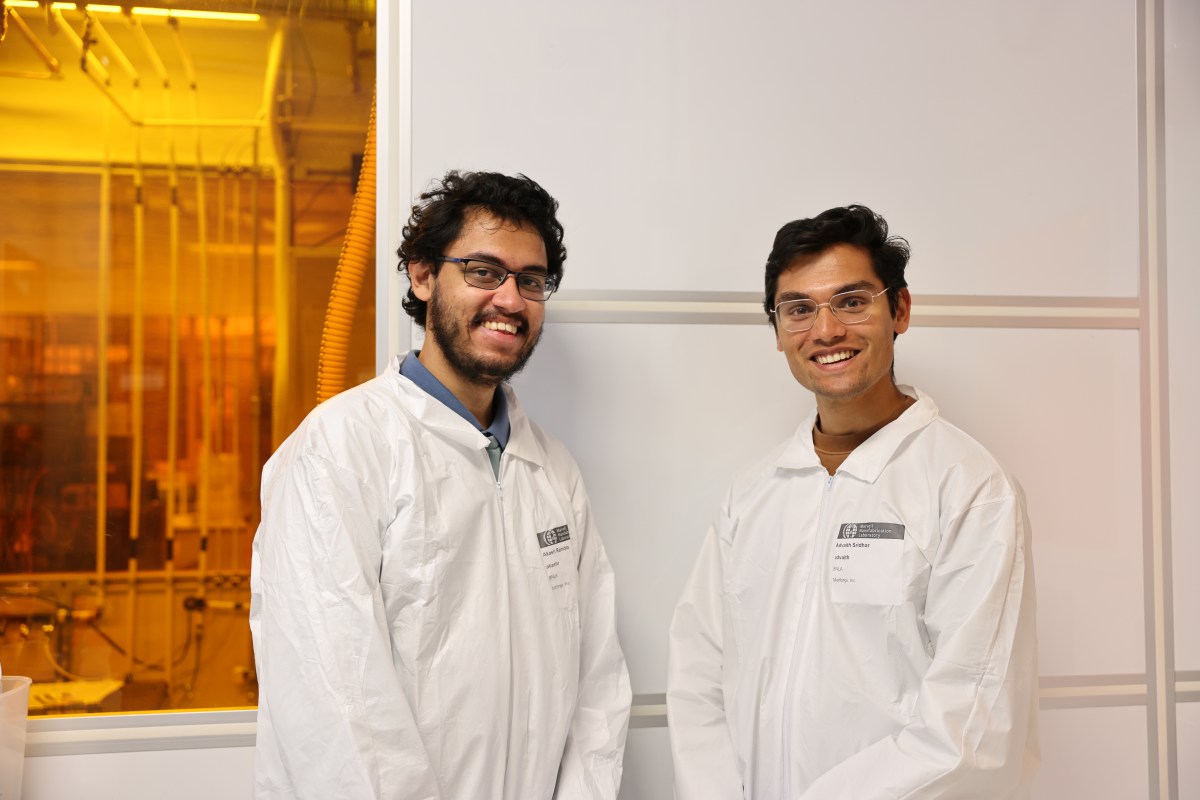



One morning in January 2025, a Falcon 9 rocket built by Elon Musk’s SpaceX lifted off from Vandenberg Space Force Base in California on a mission to low Earth orbit. Among its payloads was a surveillance satellite called SCOT, short for “Space Camera for Object Tracking,” capable of tracking objects as small as 5 centimeters. The satellite was developed by Digantara Industries, headquartered in Bangalore, India.
The company described the launch as the world’s first commercial space-surveillance satellite mission, a milestone praised by Indian Prime Minister Narendra Modi as India grows increasingly serious about its ambitions in space exploration.
In December 2025, the venture capital arm of billionaire Mukesh Ambani’s Reliance Industries led a $50 million Series B funding round, valuing Digantara at $200 million and bringing the company’s total funding to $65 million. The company’s investor base also includes billionaires such as manufacturing magnate Kumar Birla and education-technology entrepreneur Ronnie Screwvala, both of whom invested in earlier rounds.
Investors have been rushing to back one of India’s leading space-technology companies, which has evolved from providing a Google Maps-like tool for locating space debris into a provider of strategic intelligence services.

Led by three co-founders - Anirudh Sharma, Rahul Rawat, and Tanveer Ahmed, all of whom were named to the Forbes 30 Under 30 Asia list in 2025 - Digantara is building a space-surveillance system capable of providing early warnings of missile launches.
The system combines a network of sensor-equipped satellites that collect data on objects in space with analytical software designed to provide intelligence on their movements and potential intentions. Such information can help governments detect and respond to potential threats.
“The world is gradually realizing that space awareness is fundamental to the militarization of space,” said Sharma, 27, the company’s CEO. Digantara was also named to the Forbes Asia 100 to Watch list of emerging small businesses and startups in 2024.
“We started this project at a very good time. It was the right time and the right place,” Sharma said, noting that the company’s growth has been driven in part by geopolitical instability, including the Russia-Ukraine conflict. He added that satellite imagery is playing an increasingly important role in shaping military strategies.
Globally, spending on space security is rising. The U.S. Congressional Budget Office estimates that the “Golden Dome” missile-defense system initiated by President Trump could cost $1.2 trillion over 20 years. The European Space Agency is spending €1.35 billion ($1.6 billion) to strengthen Europe’s capabilities.
India is also increasing investment. The country is expanding its network of reconnaissance satellites and adding nighttime imaging capabilities to strengthen national security after identifying surveillance gaps during the 2025 conflict with Pakistan.
“THE WORLD IS GRADUALLY REALIZING THAT SPACE AWARENESS IS FUNDAMENTAL TO THE MILITARIZATION OF SPACE.”
According to Grand View Research, a San Francisco-based research firm, the global market for space surveillance and threat detection is expected to grow from $1.7 billion in 2025 to $2.4 billion by 2033.
“Today’s advanced technology will become tomorrow’s commercial technology,” said Pranav Koshal, vice president at Bangalore-based Kalaari Capital, one of Digantara’s early investors.
“There are governments that could become key customers, creating a risk of revenue concentration. But at the same time, if you deliver a good service, you can achieve long-term stability,” he said.
In 2022, Digantara secured its first government contract from Singapore to track space debris, followed by a contract from Thailand. Contracts with India and the United States were signed in 2025.
Sharma said approximately 80% of the company’s $5 million in annual revenue as of March 2026 came from government customers, with the remainder generated from commercial satellite operators. The Indian government is its largest customer.
With its customer base continuing to expand, Sharma expects the company to achieve positive EBITDA with revenue reaching $50 million in fiscal 2028.
The space-surveillance sector includes major U.S. defense contractors such as Lockheed Martin and Northrop Grumman, as well as emerging players such as True Anomaly, a Colorado-based company that raised $650 million in April 2026 at a $2.2 billion valuation.
Sharma said Digantara’s end-to-end platform - from its proprietary laser and electro-optical sensors to software capable of generating near-real-time data combined with predictive analytics - provides an important competitive advantage by helping reduce costs and maintain competitive pricing.

Digantara said it will use part of the $50 million raised from Reliance to expand its presence in the United States, the world’s largest defense market.
To comply with U.S. national-security regulations as a federal contractor, Digantara established a U.S. company called Zenith Space Technologies in Colorado with a local partner in 2024.
Zenith is focused on developing next-generation satellites for missile tracking and recently secured a contract to provide the technology for the SHIELD program of the U.S. Missile Defense Agency.
“Having a presence in the U.S. market is absolutely essential. Otherwise, we would fall a decade behind what is happening there,” said Sharma, who serves on Zenith’s board.
“Our team there is primarily focused on intelligence and defense. That gives us additional room to innovate.”
More recently, Digantara has partnered with Singapore’s Defence Science and Technology Agency, the procurement agency of Singapore’s Ministry of Defence, to use the company’s technology to monitor the city-state’s satellites.
Digantara plans to expand into Europe by the end of 2026. In India, the company is developing capabilities beyond low Earth orbit to monitor borders and eventually extend its operations to lunar orbit.
Sharma first became interested in space technology while he and Rawat, now Digantara’s COO, were studying computer science at Lovely Professional University in the northern Indian state of Punjab.
After speaking with their high-school friend Ahmed, who was studying aerospace engineering at R.V. College of Engineering in Bangalore and participating in a student satellite program, they decided to launch a similar initiative.
Sharma recalled sending hundreds of emails to satellite developers in search of mentors, receiving only a handful of responses.
One potential customer came through the chief engineer of a South American space agency that was interested in expanding its supply chain from the United States to India.
The engineer helped the students design a satellite structure. Sharma, whose father worked for India’s Defence Research and Development Organisation in Bangalore, then connected with a manufacturer in the city.
Needing a company name to issue invoices to the customer, Sharma registered Digantara Research & Technologies in 2018.
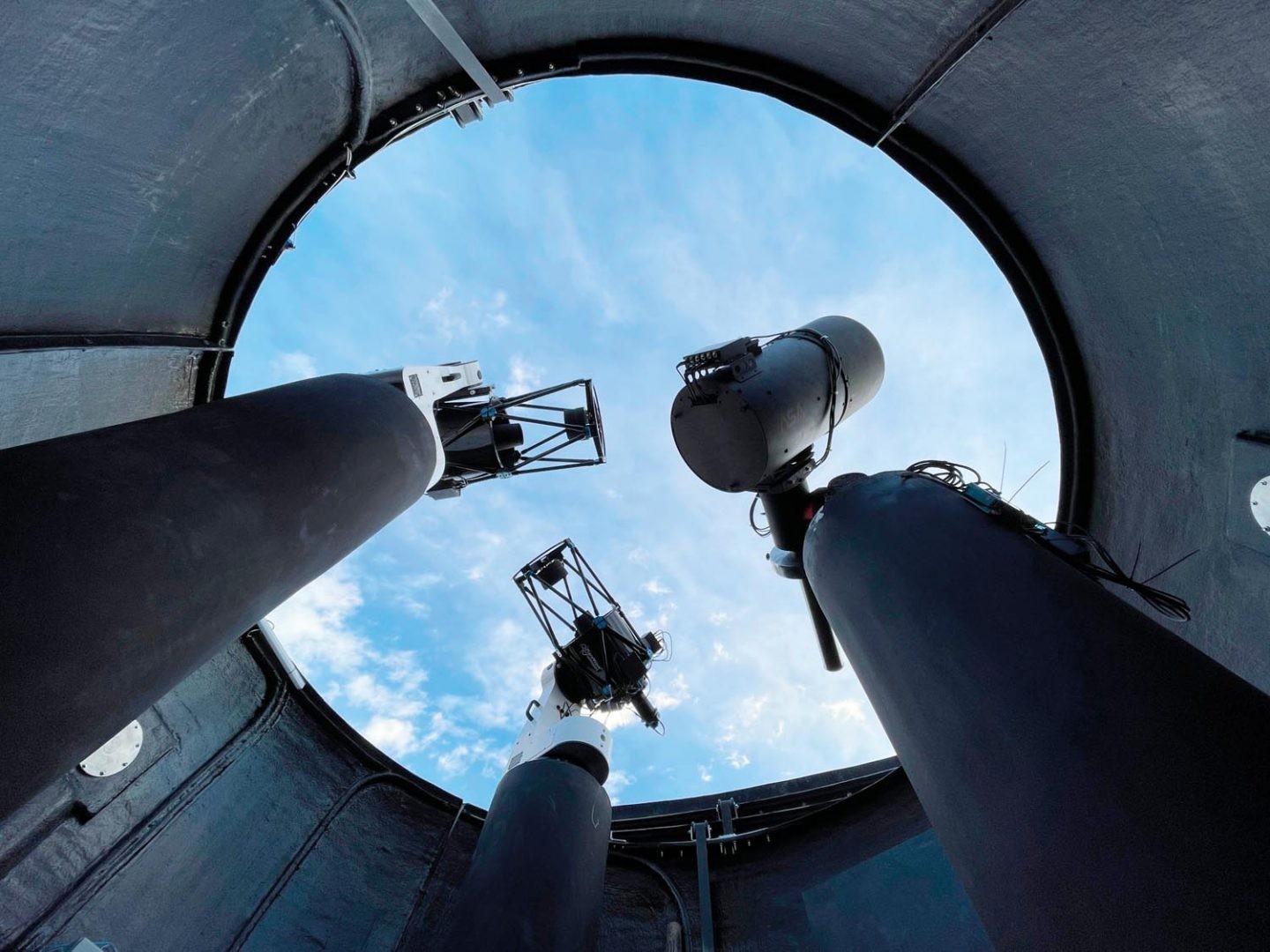
A year later, when a satellite using components supplied by Digantara collided with space debris, the two young entrepreneurs began exploring how to deploy lidar — a light-based sensing technology used in robotics and autonomous vehicles to detect and measure distances — in space to reduce the risk of collisions.
Encouraged by industry representatives at a space conference they attended in Washington, D.C., Sharma and Rawat decided in 2019 to pursue the idea full-time.
They dropped out of university in early 2020 and moved to Bangalore, where Ahmed joined them after completing his studies.
According to local media reports, the three co-founders collectively own 27% of the company. They received $15,000 in government funding to develop the system.
However, getting Digantara into the prestigious technology startup incubation program at the Indian Institute of Science proved more difficult, requiring three attempts.
In late 2020, Indian military officers visited the company, setting it on a new course.
The military was exploring India’s emerging high-tech startup sector. The officers wanted to understand the development path for the co-founders’ patented concept: a satellite-based lidar sensor system for tracking objects in orbit.
According to Sharma, the discussions prompted Digantara to think beyond simply mapping the location of objects and toward predicting their behavior and intentions. He also credited the military’s support with helping the company gain a clearer understanding of the broader business opportunity.
“HAVING A PRESENCE IN THE U.S. MARKET IS ABSOLUTELY ESSENTIAL. OTHERWISE, WE WOULD FALL A DECADE BEHIND WHAT IS HAPPENING THERE.”
Three subsequent funding rounds enabled Digantara to develop and commercialize its hardware and software.
The company launched the first of two sensor-equipped satellites, alongside a network of ground-based sensors in Chile, New Mexico, and India, to survey space debris for commercial customers.
Education-technology billionaire Screwvala, who invested in Digantara in 2025, said what attracted him was the founders’ serious commitment to building a long-term business.
“They have a global vision and the ability to scale,” he explained.
Digantara currently has one satellite operating in space and plans to launch another 10 satellites over the next two years, including two purpose-built satellites for missile warning and target tracking.
Going forward, the company expects to collect approximately 70% of its data from sensors across its satellite network, with the remainder coming from ground stations. It also plans to establish three additional ground stations in Kazakhstan, Mongolia, and Namibia.
In addition to its 2,320-square-meter facility in Bangalore, which can assemble five satellites simultaneously, Digantara plans to build a larger complex in Andhra Pradesh with six times the current capacity.
“The space-technology sector is growing rapidly, but timelines are often extended. Sometimes the technology does not work in practice, sometimes there is insufficient infrastructure to launch, and sometimes the technology is ready but customers still want more time or additional evidence of safety,” said Suhani Doshi, vice president of investments at Bangalore-based Mela Ventures, which has invested in Indian space-imaging company GalaxEye.
“The likelihood of revenue being delayed is very high, and that requires patience,” she added.
With ample funding, Digantara’s co-founders are actively looking for smaller companies around the world to strengthen their supply chain.
“The key objective is to pursue inorganic growth,” Sharma said, “primarily by integrating technologies in adjacent fields through acquisitions that can help us become a defense-industrial conglomerate.”
THE SPACE RACE
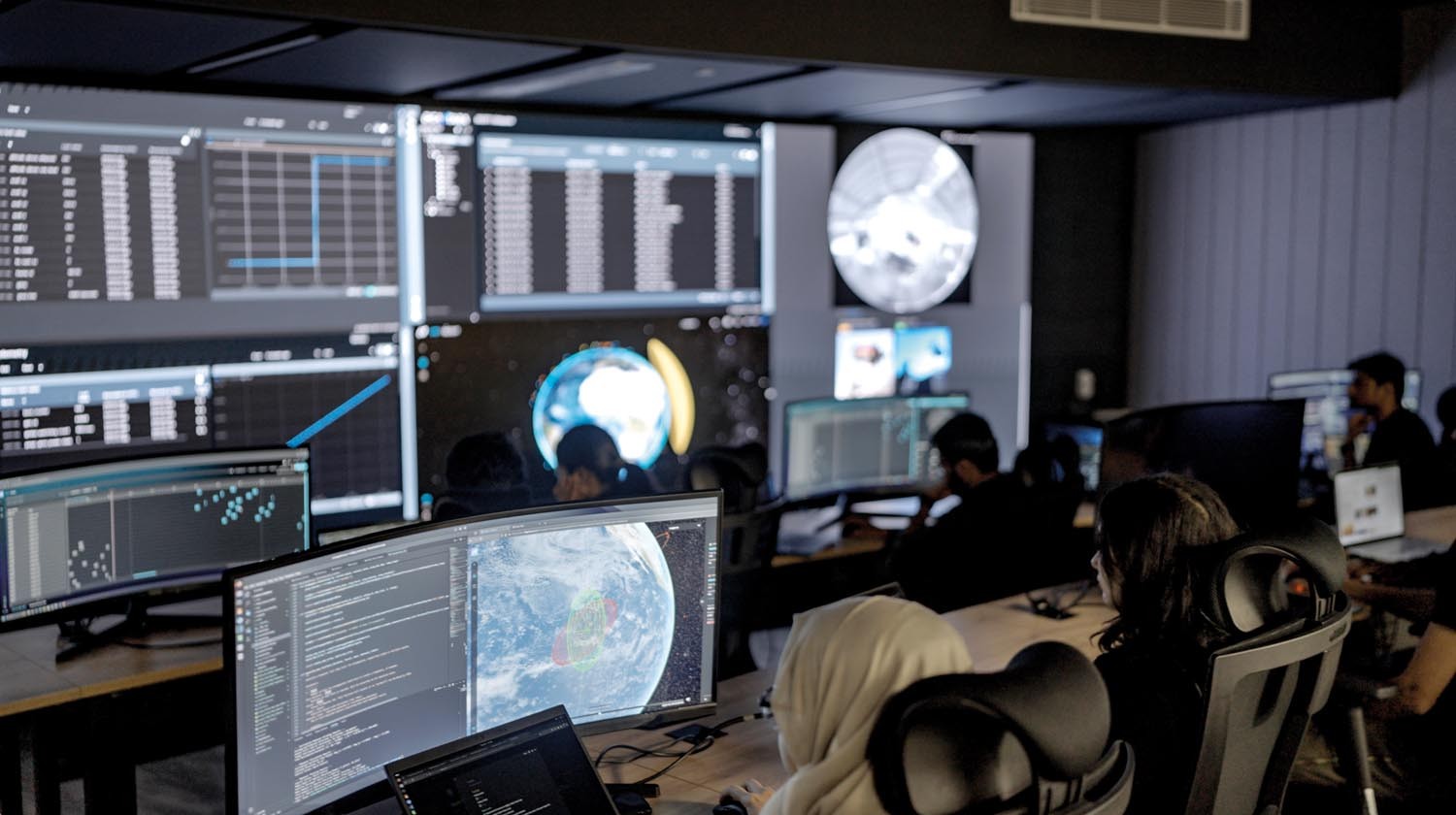
India’s space industry, which currently accounts for around 2% of the global space-satellite market, is catching up and is projected to grow from its current $8 billion in annual revenue to between $40 billion and $45 billion over the next decade, according to the Indian government’s Press Information Bureau.
Contributing to this growth is a wave of private companies that entered the sector beginning in 2020, which had previously been dominated entirely by the government.
The Indian Space Policy 2023, introduced earlier, established a regulatory framework designed to facilitate greater private-sector participation.
India now has nearly 400 startups operating across areas including launch vehicles, satellite manufacturing, space electronics, Earth observation, and downstream applications.
In May 2026, Skyroot Aerospace, headquartered in Hyderabad and founded by scientists who previously worked at the government’s Indian Space Research Organisation (ISRO), became the country’s first space-tech unicorn after raising $60 million at a $1.1 billion valuation.
These emerging companies, including Digantara, are now seen as key to India’s ambition of capturing 8% of the global space-satellite market by 2030.
(Source: Forbes Vietnam)
(Translated by: Startup Hai Phong)