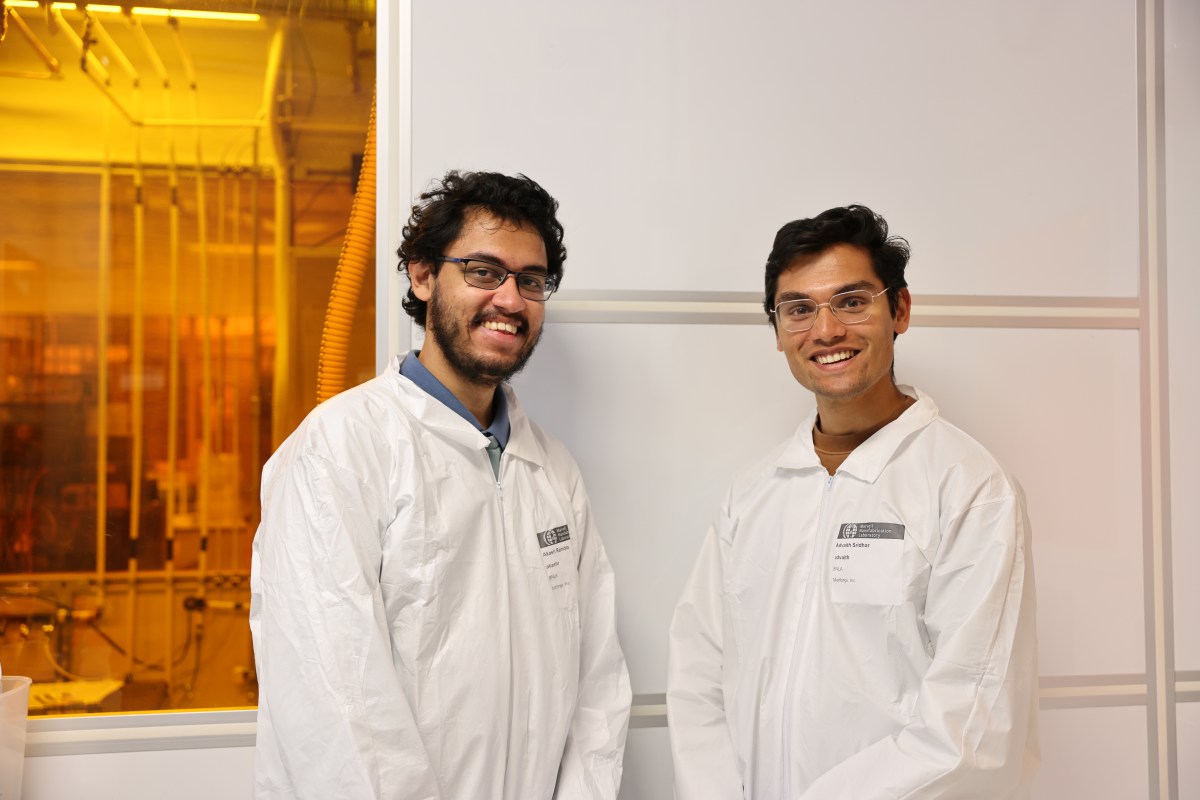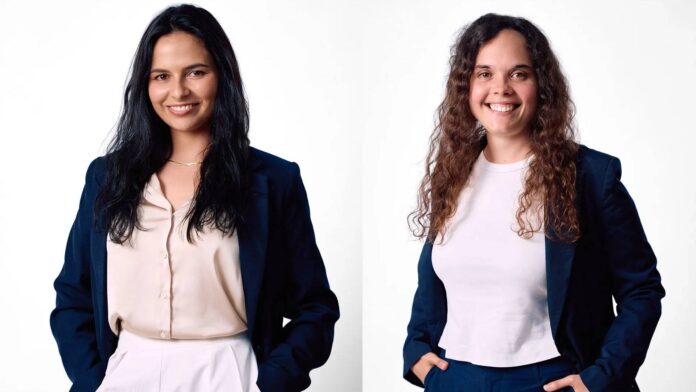


When Davis Chong Chun Shiong and three university friends founded the company in 2012, banks across Malaysia refused to provide financing, considering the solar installation business model too risky. The four young men pooled together 200,000 ringgit (approximately VND 1.26 billion) from their personal savings and loans from relatives to launch the business. For the first two years, Chong continued working as an engineer during the day, devoting his evenings and days off to developing the company.
The CEO of Solarvest Group recalls the early days of going door to door to market rooftop solar systems. Many residents were skeptical and regarded the service as a scam. The first turning point came when the company secured a contract worth 40,000 ringgit (approximately VND 252 million). This became the foundation upon which the business gradually grew into a major name in the region's renewable energy industry.
According to Forbes data, Solarvest currently holds a 30% share of Malaysia's rooftop solar market, with 4,500 completed installations. The company's market capitalization has increased 30-fold since its listing in 2019, reaching 4.1 billion ringgit (nearly VND 26 trillion).
In the fiscal year ending March 2026, the company's revenue reached 759 million ringgit (nearly VND 4.8 trillion), while net profit increased 11-fold to 80 million ringgit (more than VND 500 billion), earning Solarvest a place on Forbes Asia's Best Under A Billion list.

Capitalizing on the Data Center Boom Among US Corporations
The boom in artificial intelligence (AI) infrastructure is turning Malaysia into one of the region's fastest-growing data center hubs. This shift is driving enormous demand for computing power and increasing pressure to consume clean energy in order to achieve carbon neutrality targets. Solarvest's management recognized this as a promising market and has focused its efforts on capitalizing on the opportunity.
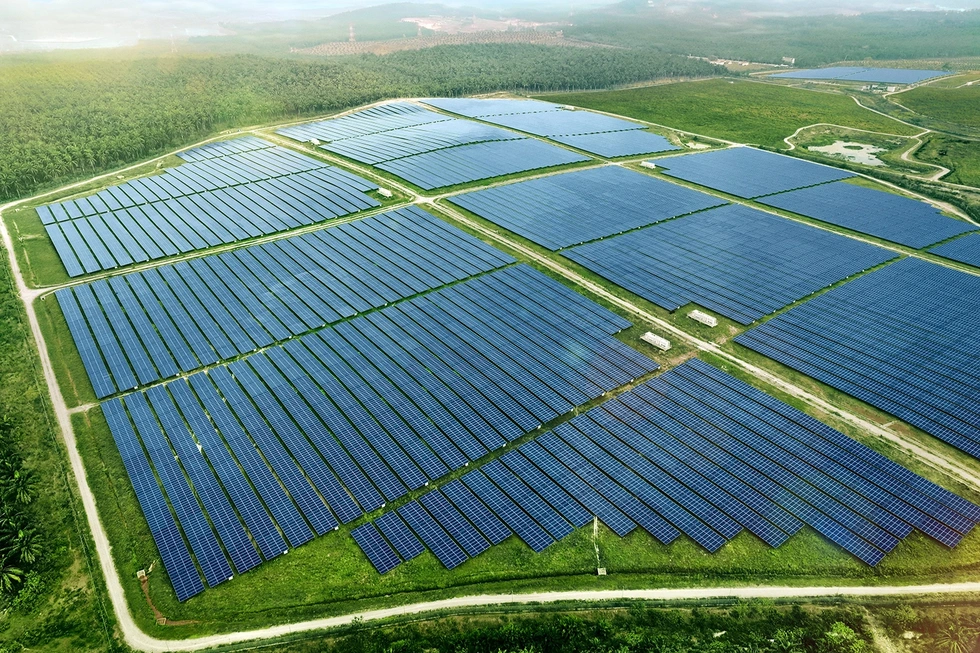
According to Forbes, Solarvest has quickly signed direct electricity supply agreements with a number of leading US corporate customers. The company is developing a 52 MW solar farm in Perak in partnership with TNB Renewables to supply two US semiconductor manufacturers, Micron Technology and Texas Instruments. In Kedah, Solarvest holds a one-third stake in a 30 MW project designed to supply electricity directly to Google's data center.
Ahmad Maghfur Usman, an analyst at Nomura Securities, said that electricity consumption in Malaysia had surged to unprecedented levels over the past two years. Data center customers now account for approximately 6–7% of the country's total electricity consumption, double the figure recorded a year earlier. According to data from Malaysia's Ministry of Energy Transition and Water Transformation, peak electricity demand from these centers is expected to reach 8.4 GW by 2030. This is creating expanding business opportunities for companies that already have clean energy infrastructure in place.
According to figures cited by Nikkei Asia, Solarvest currently has an order backlog worth as much as 2.5 billion ringgit (approximately VND 15.75 trillion). The company aims to increase its annual total order value to 5 billion ringgit (more than VND 31.5 trillion) in the coming period. "Data centers are compelled to have their own green energy sources. This opens up a major structural growth opportunity for us," Chong told Forbes.
Moving Beyond Rooftops to Own Trillion-Dong Solar Farms
Originally operating under the name Atlantic Blue, the four founders – Chong, engineer Lim Chin Siu, and brothers Tan Chyi Boon and Tan Paw Boon – soon realized that focusing solely on installing solar panels on residential rooftops would constrain the company's growth. To expand rapidly and on a larger scale, they needed substantially greater financial resources to access major projects from the government and corporate sector.
In 2017, businessman Chiau Beng Teik, from Chin Hin Group, invested 25 million ringgit (approximately VND 157 billion) to acquire a 45% stake in Atlantic Blue. This strategic investment provided the foundation for Solarvest to participate in Malaysia's Large Scale Solar (LSS) government tender programs. Following its listing and subsequent growth, Chin Hin Group divested its entire stake in 2024, leaving the founding team with full control of the company.
Moving beyond its role as a conventional engineering, procurement, construction and commissioning (EPCC) contractor, Solarvest began shifting towards higher value-added segments. The company adopted a model of retaining 20–30% equity stakes in successfully developed solar farms. This approach generates long-term recurring cash flows from power purchase agreements (PPAs), rather than relying solely on one-time construction payments. One notable example is the company's 20% stake in a 690 MW project worth 1.1 billion ringgit (nearly VND 7 trillion) in Perak, developed in partnership with Malakoff.
According to Nikkei Asia, Solarvest has partnered with Canadian asset management group Brookfield to establish a joint venture worth 5 billion ringgit (more than VND 31.5 trillion) to develop 1.5 GW of solar power capacity combined with battery energy storage systems (BESS). At the same time, the company plans not to hold these assets for too long, but instead to divest them after five to seven years of operation to recover capital for new projects. CEO Davis Chong aims to increase the share of recurring profit to 30% by 2029.
Supply Chain Pressures and Regional Expansion Ambitions
Despite its promising business outlook, Solarvest's expansion has not been entirely smooth. The company's profit margins face numerous uncertainties due to its heavy reliance on equipment supplies from China. Global solar panel prices fluctuate continuously in response to changes in the costs of raw materials such as silver and silicon.
In addition, China's removal of the 9% export tax rebate on solar panels has increased procurement costs. In Malaysia, US tariffs on imported solar products with links to China have also forced some manufacturing plants to scale back operations. Zayana Zaikariah of the Malaysian Institute of Strategic and International Studies warned that supply chain disruptions could occur if regional manufacturing infrastructure were affected by trade barriers.
To reduce risks associated with dependence on a single market, Solarvest is expanding its network across seven countries and territories in the Asia-Pacific region. In the Philippines, high retail electricity prices create attractive profit margins for solar projects. Meanwhile, markets such as Vietnam and Indonesia offer considerable room for growth through large-scale projects serving the manufacturing sector.
Although construction and installation activities remain the company's main revenue driver, its long-term vision lies in digitalization. Having previously worked at Intel and Dell for many years, Chong wants to apply the mindset of a technology company to the energy sector. The company is developing AI algorithms to automate the charging and discharging of energy storage batteries and optimize the timing of electricity sales to the grid, with the aim of enabling smart electricity distribution without relying on manual human control.
(Source: Dan Tri Newspaper)