


While technology giants are spending hundreds of billions of dollars developing AI, microbusinesses in the United States need only a handful of AI tools to operate their business models at low cost.
As a result, more and more people can run businesses generating millions of dollars in revenue without hiring employees.
Alex Willen expects the 12 e-commerce brands he operates, without a single employee, to generate between $2.5 million and $3 million in revenue this year.
Meanwhile, Kristin Ginn left Microsoft in March to establish trnsfrmAItn, an AI consulting firm. In just seven months, her business had generated approximately $250,000 in revenue from contracts already signed or commissioned through the end of the year, despite having no employees or regular contractors.
“The biggest misconception is that AI simply helps individuals become more productive. In reality, this technology allows one person to take on work that previously required an entire team,” said Erik Brynjolfsson, an economist at Stanford University.
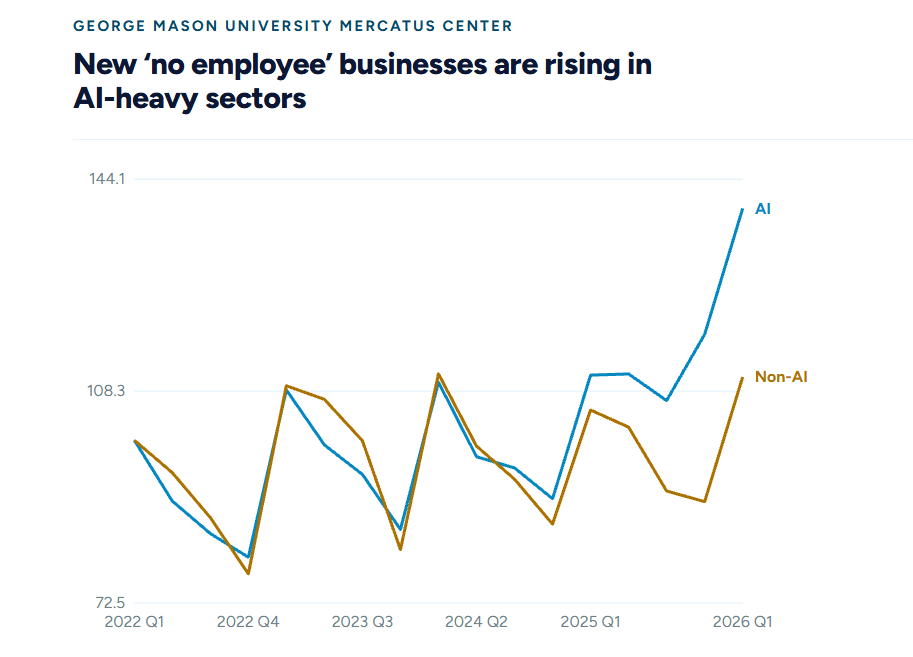
According to Liya Palagashvili, a labor economist at George Mason University, the number of newly established businesses is increasing, particularly among those less likely to hire employees.
In industries most heavily affected by AI, business registration filings showing no indication of hiring increased by 26.8% between the first quarter of 2024 and the first quarter of 2026, from approximately 222,000 to 281,000 filings per quarter. By contrast, filings indicating that businesses planned to hire employees declined by 6.4%.
However, Palagashvili noted that these are still preliminary research findings and are insufficient to prove that AI directly caused this trend. The data also do not indicate whether these businesses will maintain a one-person operating model or eventually hire additional staff.
AI Enables One Person to Run a Dozen Brands
Willen's business model illustrates how AI can significantly change the cost equation. He uses Anthropic's Claude to assist with accounting, customer service, advertising and inventory management. OpenAI's image-generation tools handle tasks that previously required hiring photographers and designers.
Willen said that without AI, he would likely have to hire at least one additional full-time employee while outsourcing photography, design and advertising management services.
A traditional product photoshoot can cost $2,000–$5,000, while creating new images for a sales page can cost $300–$1,000.
When AI directly eliminates one of these expenses, Willen said, the money saved effectively becomes profit for his business.
AI also helps him tap into revenue streams that had previously been largely overlooked. After acquiring outdoor accessories brand Lone Trail, Willen discovered that its Shopify website accounted for only around 1% of sales.
He used ChatGPT and Claude to rebuild the website while also applying AI to advertising on Meta. During a recent 30-day period, the Shopify channel accounted for approximately 30% of the brand's revenue.
Ginn's case also shows that a new business can quickly generate substantial revenue without having to build a workforce from the outset.
She uses AI to assist with drafting business proposals, developing pricing structures, planning strategies and handling various other tasks.
A survey conducted by FreshBooks, an accounting and invoicing software provider, found a similar trend.
A FreshBooks survey found that 79% of independent business owners had tried AI before hiring someone to perform work they could not handle themselves. When microbusinesses were included, this figure rose to 86%.
Larger Businesses Are Also Increasing Hiring Thanks to AI
Nevertheless, data on small businesses that were already operating before AI adoption point to a different trend.
Gusto, a provider of human resources and payroll software, found that businesses implementing AI had approximately 7% more employees after one year than comparable businesses that had not adopted the technology.
Notably, among businesses with fewer than 10 employees, those using AI recorded approximately 10% higher employment growth than those that had not implemented it.
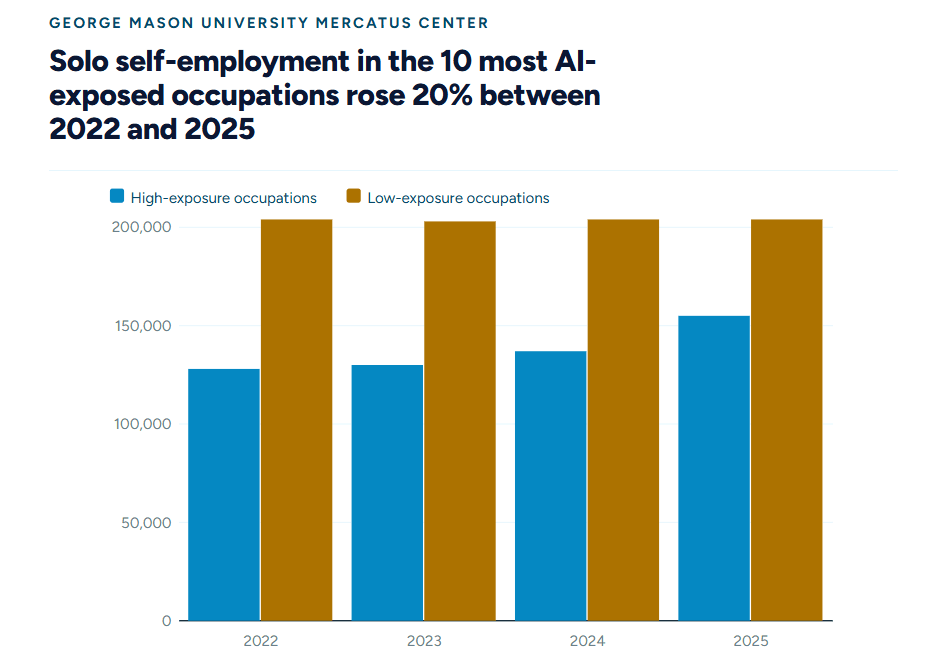
increased by 20% between 2022 and 2025
Thus, AI does not necessarily lead businesses to cut jobs. On the contrary, cost savings and productivity gains may enable companies to expand their operations, thereby creating additional demand for labor.
However, for businesses choosing an employee-free operating model, reduced dependence on labor does not mean they can operate independently of major technology platforms.
Around 80% of Willen's revenue comes from Amazon, while he uses Meta and Shopify to develop direct sales channels. For Ginn, LinkedIn is one of the most important sources of customer acquisition.
According to Brynjolfsson, the growth of small-scale producers may even increase the value of platforms that connect them with buyers.
“There are countless products serving niche markets. At the same time, major platforms such as Amazon are becoming more powerful than ever because they bring all these products together and put them in front of customers,” he said.
Brynjolfsson said AI is helping many small producers survive and compete economically. As the costs of creating products and operating core business activities decline, small businesses will focus more on finding customers and building distribution channels.
Mid-Sized Businesses Face the Risk of Being Squeezed
Brynjolfsson predicts that AI could increase the average size of businesses while also driving greater consolidation across many industries.
As technology makes it possible to systematize knowledge and process information that was previously distributed among multiple employees, large corporations may be able to leverage economies of scale more effectively.
Meanwhile, mid-sized businesses risk becoming trapped between two ends of the market: small teams operating with high productivity thanks to AI, and giant corporations with superior technological resources.
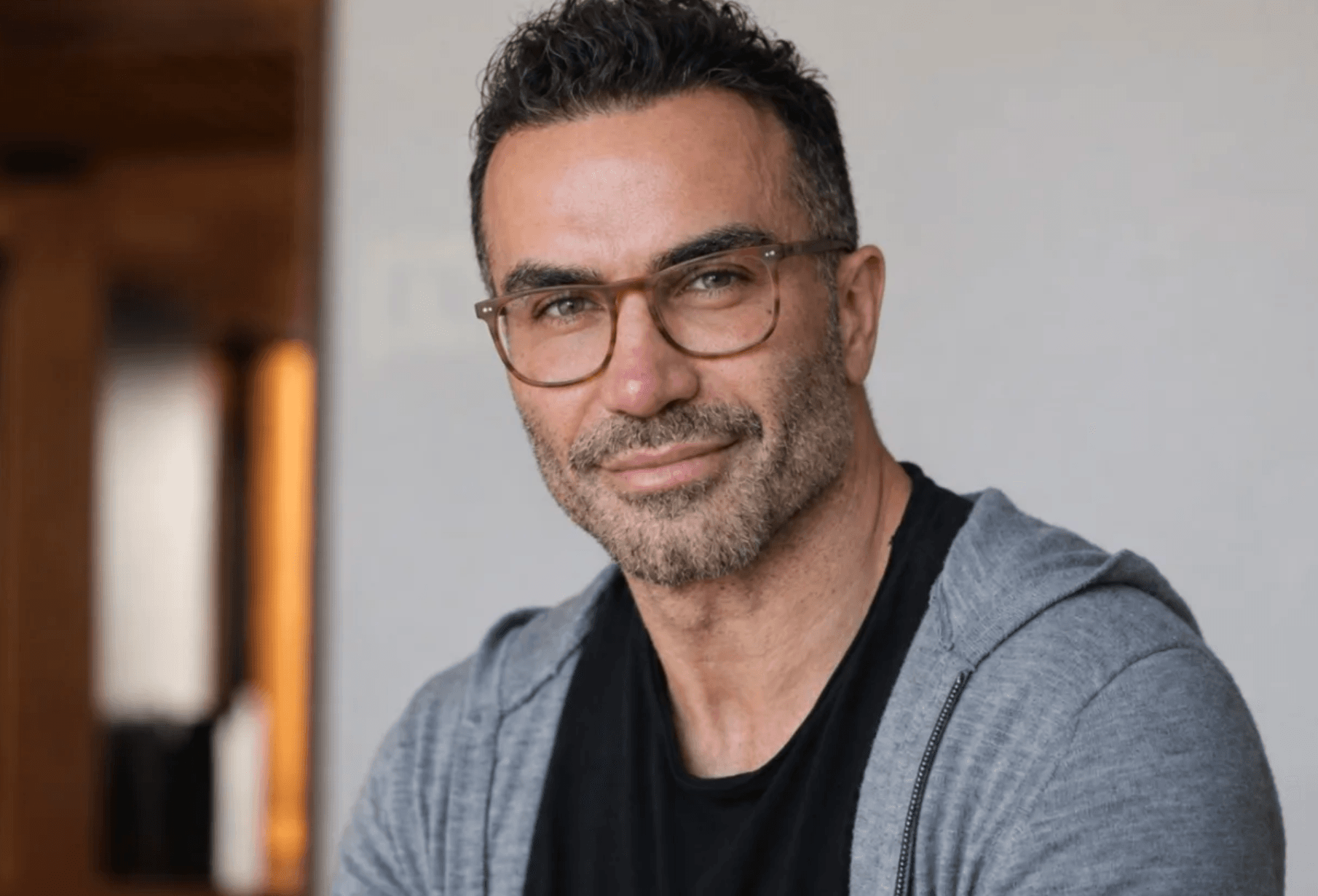
in using AI to modernize legacy systems
“Management layers focused on coordinating internal operations are likely to be significantly reduced,” he observed.
Adam Branch, founder of enterprise software company rhino.ai, has witnessed this transformation. Previously, he ran Incentive Technology Group (ITG), a technology services company with approximately 500 employees.
Under the traditional business model, the company had to hire more people to take on additional projects.
Today, rhino.ai has approximately 50 employees and uses AI to automate many tasks that previously required entire teams. Branch estimates that employee productivity on systems modernization projects is now three to four times higher.
The company's labor cost share has also fallen from approximately 85% at ITG to 40%, while technology costs have increased from 5% to 25%.
An AWS study involving 3,413 startup founders and executives across 20 countries also identified this trend. Businesses adopting AI achieved average annual revenue growth of 156%, compared with 65% for startups overall.
More than half generated over $400,000 in revenue per employee.
Ruba Borno, Vice President of AWS Specialists and Partners, said: “In the past, growth was directly tied to the number of employees a business could hire. Today, founders can scale their operations through technology rather than relying solely on workforce size.”
Brynjolfsson believes AI is creating benefits for businesses, technology platforms and consumers alike. Independent entrepreneurs can retain some of the gains from increased productivity, while customers gain more choices and technology platforms expand their networks of sellers.
According to him, the biggest change lies not only in how much money AI helps businesses save, but also in the opportunities it creates for newcomers entering the market.
They can start businesses without having to build cumbersome organizational structures or face the constraints of traditional business models.
(Source: Dau tu – Kinh te Chung khoan)
(Translated by StartupHaiPhong)